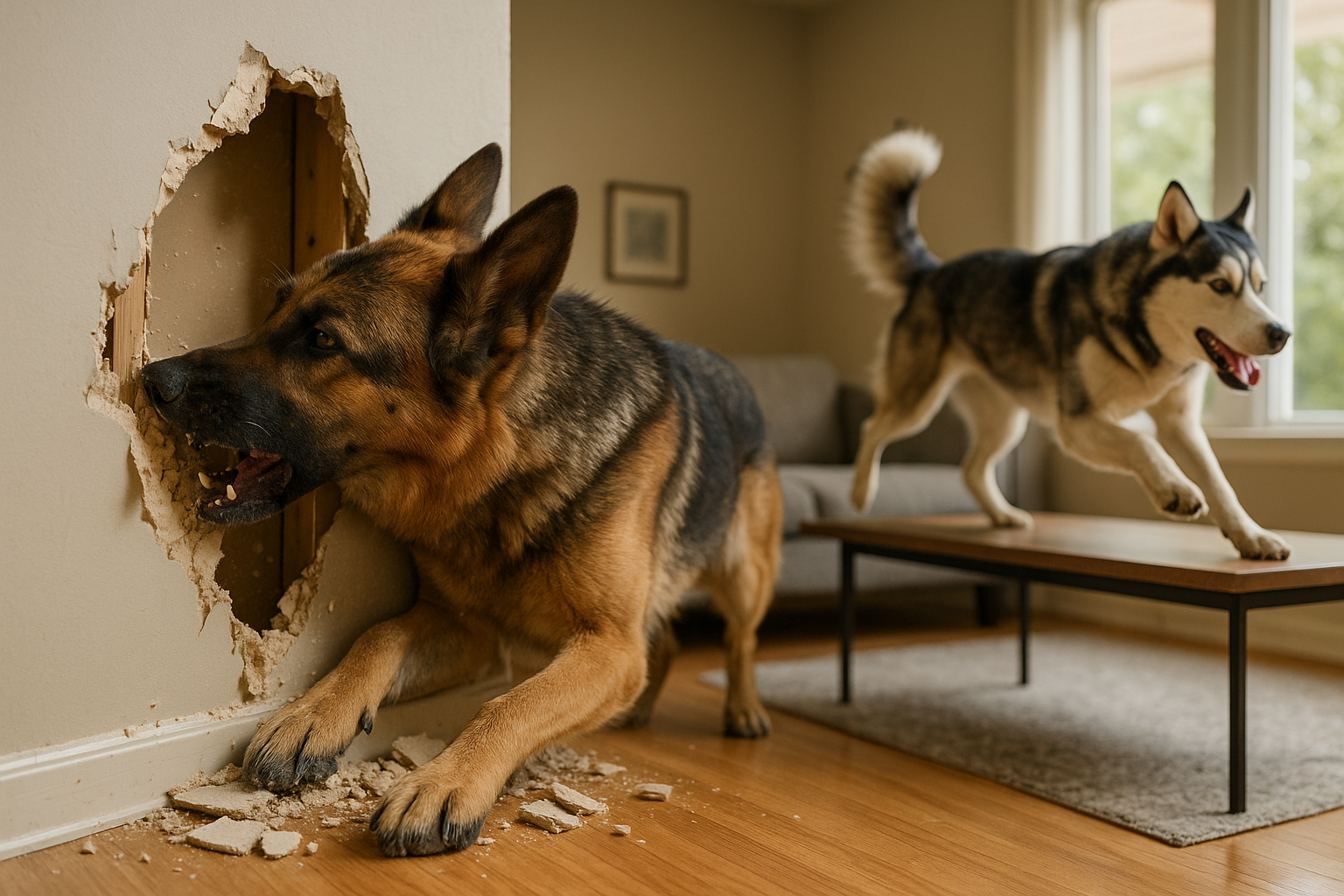
What happens when a dog and owner simply are not a good match? We talk endlessly about training, obedience, structure, and control, yet far less about compatibility. A dog may be too intense, too independent, too sensitive, too social, too demanding, or simply too different from the human who chose it. When that mismatch is ignored, people often respond by increasing control rather than questioning whether the relationship itself makes sense.
This article explores the uncomfortable difference between loving a dog and truly being compatible with that dog, and why genuine connection cannot be forced through obedience, pressure, or possession. Sometimes the most responsible thing we can do is stop asking, “How do I make this dog become what I want?” and begin asking, “Who is this dog, and what kind of life would allow this animal to flourish?”
Animal Behavioral Sciene , Training Techniques, Behavior Modification
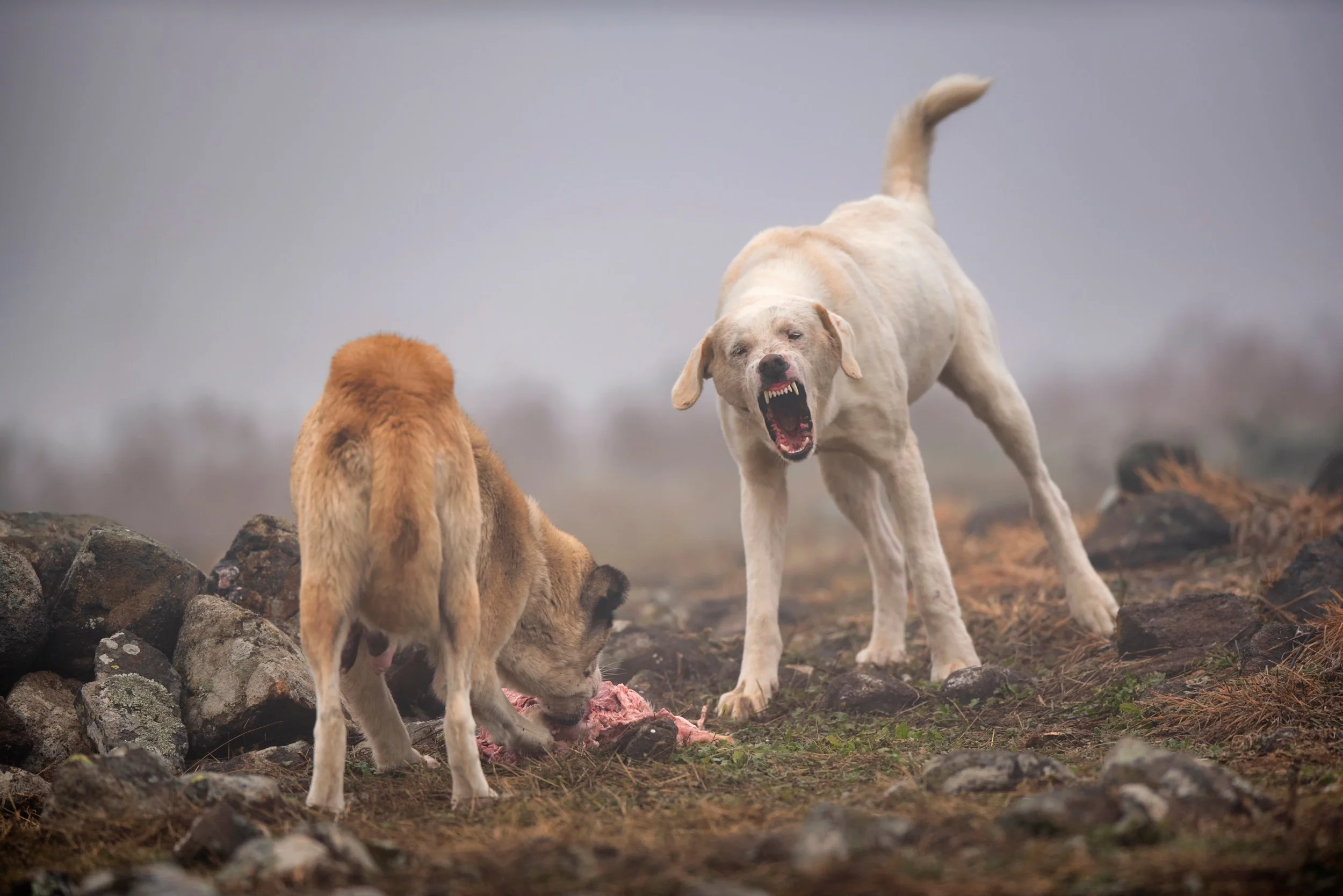
Let’s stop dancing around the truth: the "standard of care" that mandates mass neutering is fueling a behavioral epidemic. We have been sold the lie that removing a dog’s primary sex organs will "calm them down," but for the vast majority of reactive dogs, the opposite is true. Aggression is rarely driven by an excess of confidence; it is driven by fear, anxiety, and environmental insecurity. Testosterone and estrogen aren't just for reproduction—they are foundational health hormones that provide emotional stability and confidence. When you surgically remove these "biological brakes," you aren't slowing a reactive dog down; you are cutting the lines and forcing them to navigate a stressful world without their natural chemical armor.
If you are currently dealing with a reactive dog and are planning to "fix" them before starting training, you are walking into a catastrophe. Modern research, including data from over 15,000 dogs, shows that neutered animals are significantly more likely to show stranger-directed aggression and fearfulness. By neutering during a behavioral crisis, you are effectively freezing your dog in a state of permanent juvenile insecurity, often leading to a massive spike in Luteinizing Hormone (LH) that keeps the brain in a state of chronic unrest. My directive to you is simple: cancel the surgery. We must fix the behavior before we touch the biology. Give your dog the chance to reach social maturity with their hormonal integrity intact so we can build a stable, regulated mind that is capable of learning.
Animal Behavioral Sciene , Training Techniques, Anxiety Aggression Fear, Behavior Modification
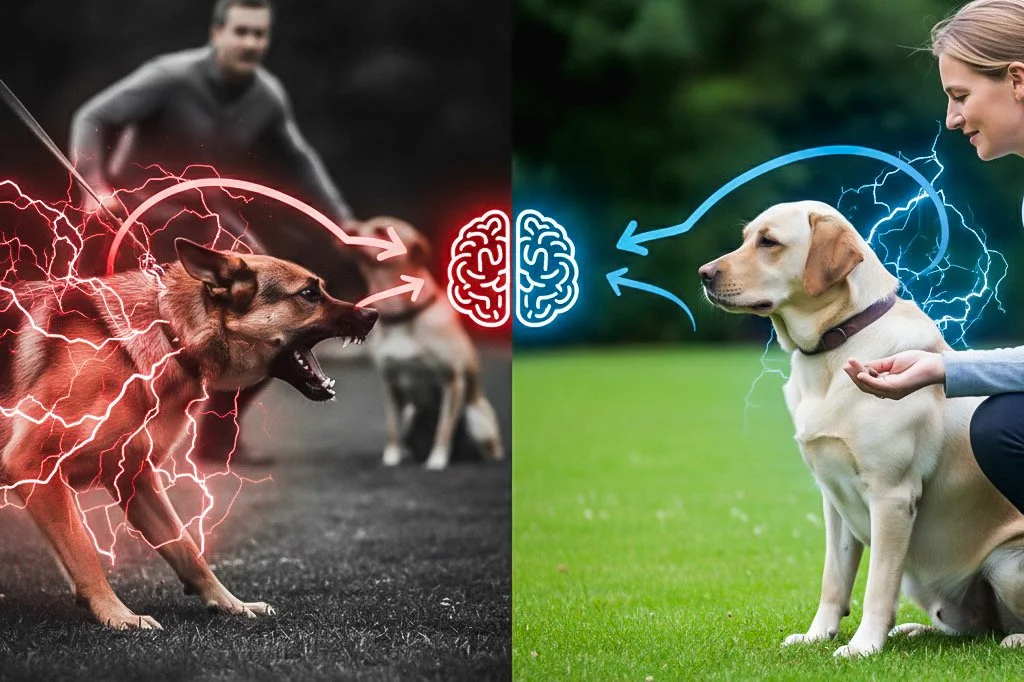
The most catastrophic misdiagnosis I see in my work is the conflation of reactivity with aggression. One is a physiological reflex; the other is a learned strategy. In this article, I dissect the critical neurological difference between what I call the Primal Mind—the reflexive, amygdala-driven survival system—and the Cognitive Mind, which is the prefrontal cortex, the center of decision-making and intention. A reactive dog is a dog whose Primal Mind has hijacked its nervous system, often due to a high allostatic (stress) load, leaving it drowning in cortisol and unable to access its 'thinking' brain.
I also explore the tragic slide of how chronic, unmanaged reactivity becomes learned aggression, and how the handler's own nervous system—our own stress and tension—creates a devastating neuroceptive feedback loop that co-regulates our dog's panic. Understanding this biology is not academic; it is the only way to formulate a correct intervention. I provide the specific neurological protocols for both: how we rewire the Primal Mind's emotional association using counter-conditioning, and how we reroute the Cognitive Mind's learned strategy using a combination of differential reinforcement and safe, non-confrontational negative punishment. This is the science of moving from chaos to clarity.
The debate over whether crate training is a beneficial practice or a cruel imposition cannot be resolved with a simple, universal answer. The scientific evidence demonstrates that the crate's impact on a dog's welfare is not an inherent quality of the object itself but is determined entirely by the context of its use—a context created and controlled by the human guardian. A dog's actual experience of the crate is a tangible neurophysiological event, governed by a constant balance between the sympathetic nervous system's threat response and the parasympathetic nervous system's state of safety and calm. The tipping of this balance is dictated by the principles of learning theory. Through careful, positive classical conditioning, the crate can become a conditioned stimulus for relaxation. Through misuse, punishment, or force, it becomes a potent trigger for fear, anxiety, and potentially, the pathological state of learned helplessness.
In this article I will try to explain how these opposing outcomes are not a matter of chance, but are the predictable results of specific, measurable factors. By deconstructing the popular but flawed "den animal" analogy through the lens of wild canid ethology, examining the brain's threat-detection and safety circuits, and applying the fundamental laws of associative learning, I will build a clear, evidence-based framework. This framework will empower guardians to move beyond the simplistic "good versus cruel" debate and instead focus on what truly matters: creating a context of profound safety for their canine companions.
Ultimately, the crate serves as an amplifier, magnifying the qualities of the dog's broader environment. In a life characterized by predictability, enrichment, and security, a crate can become a congruent extension of that safety—a personal sanctuary. 🧘 In a life of chaos, unpredictability, and unmet needs, it becomes a cage that confines the dog with its ambient stress. Therefore, the ethical and practical utility of a dog crate is entirely dependent on the knowledge, skill, and empathy of the individual who wields it. The responsibility for the outcome—a calm, confident dog that views its crate as a safe haven, or a fearful, anxious animal trapped in a state of distress—lies not with the tool, but exclusively with the user.
Bart De Gols

Drive is biology, not behavior. It is the expression of genetic programming etched into a dog’s nervous system and refined through centuries of selection. When I see people trying to suppress drive with harsh methods or deprivation, I don’t see training—I see trauma. The science is clear: suppression elevates cortisol, shuts down dopamine, and erodes neuroplasticity. The dog may look calm on the outside, but what I often see is learned helplessness—the quiet of defeat, not the balance of fulfillment.
In this article, I explain why suppression is abuse, and why fair, mild corrections, used only after drive has been properly channeled, are not cruelty but part of biology itself. My work is about engagement, mental stimulation, and breed-specific outlets that respect the dog’s genetics while building partnership. True training isn’t about erasing drive. It’s about harnessing it with purpose while keeping the spark of the animal alive